10-Point Assessment


Incontinence Treatment in Southside Jacksonville: Non-Surgical Options First
Book Now
Call Now (904) 990-1619
Incontinence Treatment Starts With the Least Invasive Option
Quick Summary: Incontinence Treatment at Be Still Southside starts at $99.
Most bladder leaks tied to a weak pelvic floor don't need surgery as the first step. Start with free habits at home, then move to a non-surgical in-clinic option if those aren't enough. Medication and surgery stay on the table, but they rarely need to come first.
Do you leak a little when you cough, laugh, sneeze or pick up your kids? You're far from alone, and it's not something you just have to live with. Incontinence Treatment in Jacksonville doesn't have to begin with surgery or a daily pill. We believe the right first step is the gentlest one that can work for your body.
Here's why that order makes sense. Your pelvic floor is a group of muscles that holds up your bladder and helps keep it closed. Pregnancy, childbirth, menopause, age and heavy lifting can all weaken those muscles. The good news is that muscle can often be made stronger again.
Leaks usually fall into two groups. Stress leaks happen when pressure hits your bladder, like a sneeze or a jump. Urge leaks come with a sudden, strong need to go. Non-surgical pelvic floor care is mainly aimed at stress leaks caused by weak muscles.
- Step 1, at home: Daily pelvic floor exercises, often called Kegels, plus simple habits like cutting back on caffeine. They cost nothing and you can do them privately.
- Step 2, non-surgical care in our clinic: Pelvic Floor Strengthening and Emsella help rebuild muscle support. FormaV uses radiofrequency on vaginal tissue, and it's non-invasive with no downtime.
- Step 3, medical or surgical care: If the steps above don't give you enough relief, a urologist or urogynecologist can talk with you about medication, procedures or surgery.
We'll be straight with you. If you've never tried daily pelvic floor exercises, give them a fair try first. Some people get enough relief from that alone and never need us. That's a good outcome, and we'd rather you know it up front.
Some leaks need a doctor's diagnosis before anything else. If yours started suddenly or come with pain, check in with your physician first. A medical spa is the right place to strengthen a weak pelvic floor. It isn't the place to sort out an unknown cause.
Step 2 is where we come in. Our Southside office sits at Point Meadows, near St. Johns Town Center. Our medical spa operates under a qualified Medical Director. We don't hand out one-off treatments. Instead, we start with a personalized consultation and build a plan around your body and your goals.
That plan might be one service or a mix. One woman's leaks may come mostly from weak muscles, so muscle work makes sense. Another may also notice vaginal dryness or laxity after menopause, so adding FormaV may fit better. Either way, you'll know why each step is there before you start.
If you're not sure what you need, just call us at (904) 990-1619.
Incontinence Treatment in Southside Jacksonville: What You Need to Know
Explore the benefits of an Incontinence Treatment in Southside Jacksonville for your transformational journey.
- Incontinence Treatment Starts With the Least Invasive Option
- Common Signs You Should Talk to a Provider
- How Pelvic Floor Strengthening and Emsella Fit Into Your Plan
- What to Ask Before Choosing a Provider
- When Incontinence Needs More Than a Spa Visit
Incontinence Treatment in Southside Jacksonville Frequently Asked Questions (FAQs)
Book Now
Common Signs You Should Talk to a Provider
There's no leak that's too small to ask about. Still, it helps to know when home habits have done what they can. Below are the signs that tell us it's time for a real conversation about Step 2.
- You've done pelvic floor exercises most days for a few months, and the leaks haven't really changed.
- You wear a pad or liner every day "just in case," even on days you don't plan to work out.
- You've stopped running, jumping, dancing or lifting because you're afraid of a leak.
- You hold back a laugh or cross your legs before you sneeze.
- You plan errands around where the restrooms are.
- Leaks started after a baby and still haven't settled, even though your child is long past the newborn stage.
- Since menopause, leaks showed up along with dryness or a looser feeling during intimacy.
If two or three of those sound like you, the problem isn't effort. Some muscles need more help than squeezes at a red light can give. That's what pelvic floor strengthening and Emsella are built for.
Here's one way it shows up. A mom gets back into a workout routine after her second child. She's doing her exercises at home. But every time she does jumping jacks, she has to stop and change. She's not doing anything wrong. Her muscles just need more support.
Another sign is quieter. You may feel embarrassed, so you've never told anyone, not even your doctor. That silence is very common. It also keeps a lot of women from getting help that could make daily life easier.
You don't need a referral to sit down with us and talk it through. Our Point Meadows office sits off the Southside business corridor near St. Johns Town Center. That's an easy stop from work in Deerwood or Baymeadows. Many women already know us for injectables, fillers and skin treatments and don't realize we offer pelvic floor care too.
When you come in, bring a short list. Note when leaks happen, what you were doing, and what you've already tried. That helps our team see whether muscle work, Vaginal Rejuvenation FormaV or a mix fits you best. It also helps us spot when something belongs with your physician instead.
Waiting doesn't usually make weak muscles stronger on its own. If leaks are shaping what you wear, where you go or what you skip, that's reason enough to ask.
That same focus carries through the practical Injectables, fillers and Skin Treatments guidance our Southside team provides to local families.
Learn more about our main service page.
Search Our Services

How Pelvic Floor Strengthening and Emsella Fit Into Your Plan
Pelvic floor strengthening and Emsella are the middle rung of the ladder. They're for women whose home exercises haven't done enough but who aren't ready for pills or surgery. They work on the same goal as Kegels, which is stronger muscle under your bladder, with more help than you can give yourself at home.
Many women aren't sure they're squeezing the right muscles. Some push down instead of lifting up. Others tire out after a few reps. In-clinic strengthening is meant to close that gap, so the work reaches the muscles that hold your bladder closed.
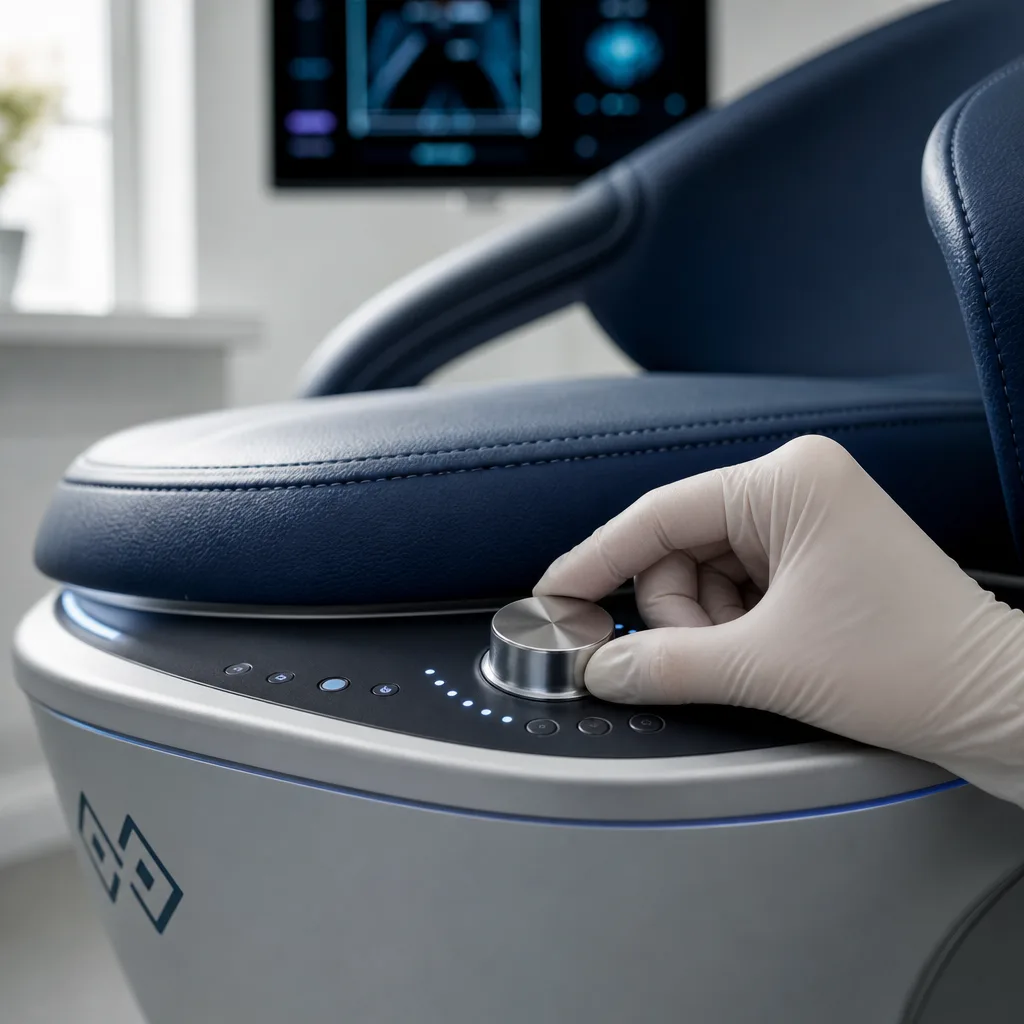
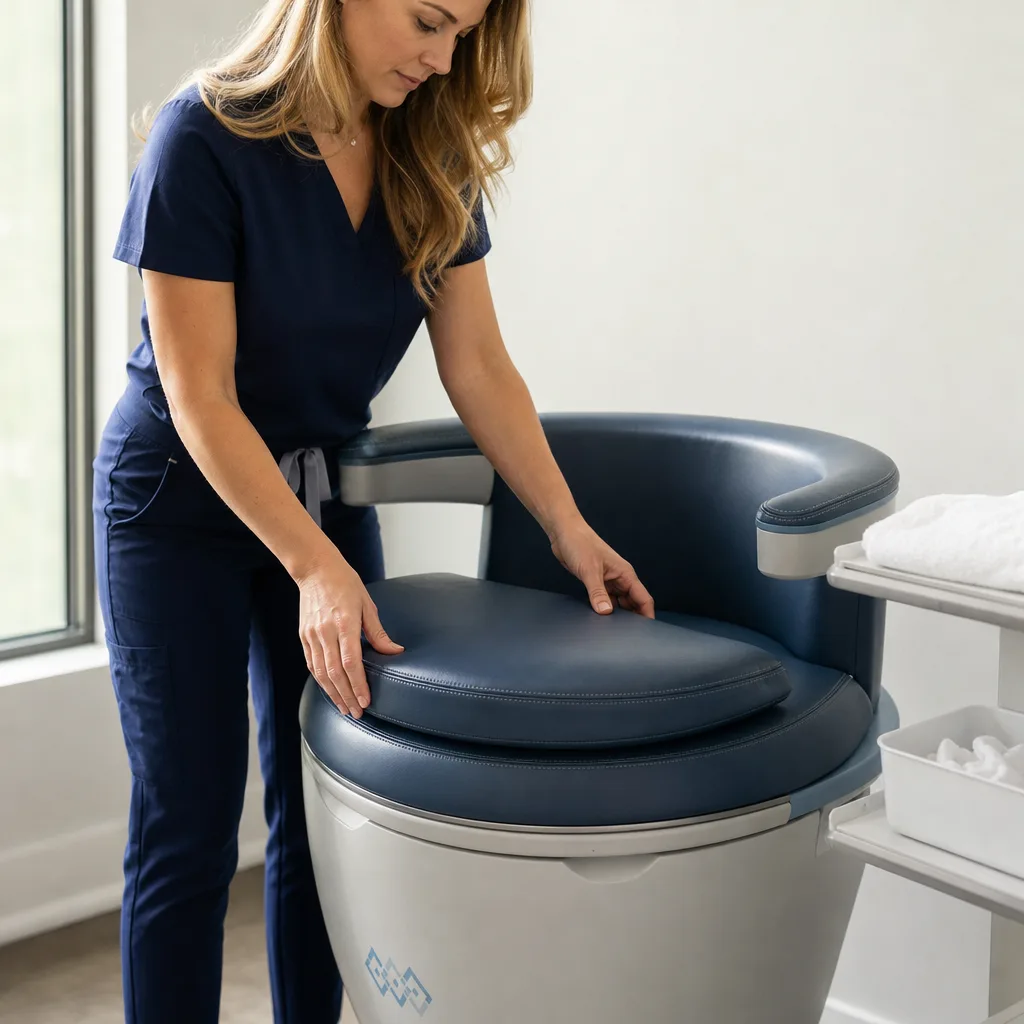
Emsella is a chair-based device. It uses electromagnetic energy to make your pelvic floor muscles contract while you sit fully clothed. Think of it as a workout for muscles that are hard to train on your own. It's non-surgical, and no needles are involved.
These options tend to make the most sense if your leaks are mostly the stress kind and weak muscles are the likely cause. They're a weaker match if urgency is your main problem or the cause isn't clear yet. In those cases, your physician should weigh in first.
- Good fit: You leak with coughs, jumps or lifting, and Kegels alone haven't changed much.
- Good fit: Leaks began after childbirth or during menopause and have stuck around.
- Maybe a mix: You also notice dryness or laxity, so Vaginal Rejuvenation FormaV could be added.
- Not first: Leaks came on suddenly, hurt, or come with blood or fever. See your doctor.
In-clinic care doesn't replace your home routine. It builds on it. Women who keep up their daily exercises give their muscles more chances to get stronger. Habits like cutting back on caffeine still matter too, because they ease the pressure on your bladder.
Our Southside office at Point Meadows sits near St. Johns Town Center, off the business corridor. That matters for a plan like this one. Muscle work is built on repeat visits, so a stop that fits around a workday in Deerwood or Baymeadows is easier to keep up.
Across the industry, cost for pelvic floor treatment depends on a few things more than the device itself. Ask any provider to explain each one before you start.
- How many sessions they recommend for you, and why that number.
- Whether the plan uses one service or pairs two, like Emsella with FormaV.
- Whether follow-up or maintenance visits are part of the plan.
- What signs of progress you should look for, and when.
A clear answer to that last question is worth a lot. You should know what change to watch for, like fewer pad changes or getting through a workout without stopping. That way, you can judge whether Step 2 is working, or whether it's time to talk with a urologist about Step 3.
Not sure about your incontinence Treatment needs? Ask us.
BOOK NOW. Be Still Wellness & Aesthetics — Southside is ready to help.
Book Now
What to Ask Before Choosing a Provider
The device matters less than the people deciding whether it's right for you. A good provider asks about your leaks before they talk about a treatment. Use these questions at any clinic, including ours.
- Who oversees care here? Ask if a medical director or licensed provider is involved, not just the person running the device.
- How will you decide if I'm a good candidate? Listen for questions about when you leak, how long it's been going on, and what you've tried.
- Can you tell if my leaks are the stress kind or the urge kind? The answer shapes whether muscle work makes sense at all.
- What health conditions would make this a poor fit for me? A careful provider screens you before your first session, not after.
- When would you send me to a urologist or urogynecologist instead? A clear answer means they know where their care stops.
- Should I keep doing my home exercises? The right answer is yes. In-clinic care adds to your routine. It doesn't replace it.
Pay attention to how they answer, not just what they say. If you feel rushed, or the talk turns to packages before anyone asks about your history, that tells you something. This is personal. You should feel safe saying exactly what's going on.
Red flags to watch for: a promise that one visit will fix everything, no questions about your health history, pressure to buy before a consultation, and no plan for what happens if treatment doesn't help.
Here's how we'd answer those questions. Our medical spa operates under a qualified Medical Director. We start with a personalized consultation instead of selling one-off treatments. From there, we build a plan around your body and your goals.
That plan may use pelvic floor strengthening, Emsella or FormaV, alone or together. If something you tell us points to a cause we shouldn't treat, we'll say so. Then we'll point you to your physician. A provider who's honest about that is one you can trust with the rest.
Picture two consultations. In the first, someone hands you a price sheet within five minutes. In the second, someone asks when you leak, what you were doing, and whether it ever hurts. The second visit takes longer, and it's the one that protects you.
Bring the short list of your leak patterns we suggested earlier. It helps any provider give you a straight answer faster. It also helps you notice whether they're really listening.
Search Our Services
Book Now
When Incontinence Needs More Than a Spa Visit
Some leaks aren't a muscle problem at all. When that's the case, pelvic floor strengthening and Emsella won't fix them. We'd rather tell you that now than have you spend months on the wrong plan.
You already know to see your doctor first if leaks came on suddenly, hurt, or come with blood or fever. A few other signs also point to a medical visit before you book with us.
- You dribble all day, or your bladder never feels fully empty. That can mean your bladder isn't emptying well, and squeezes won't change that.
- You feel a bulge, pressure or heavy feeling in your vagina. That needs a hands-on exam to check what's shifted.
- Leaks showed up with numbness, tingling, leg weakness or new back trouble. Nerves help control your bladder, so a doctor should look first.
- Leaks started soon after a new medicine. Some prescriptions affect how often or how urgently you need to go.
- You've had pelvic surgery or radiation, and leaks began afterward.
- You wake up many times a night to pee and feel very thirsty during the day. That pattern can be tied to other health issues worth checking.
Here's how that can look in real life. A woman in her sixties notices a slow leak all day, not just when she sneezes. She also feels like she never quite finishes in the bathroom. That isn't a weak muscle story, and a strengthening plan isn't her first step.
So who should you see? Start with your primary care doctor or your OB-GYN. They can refer you to a urologist or a urogynecologist. A urogynecologist focuses on women's bladder and pelvic floor problems. A pelvic floor physical therapist is another good option for hands-on muscle coaching.
Bring the same short list of leak patterns you'd bring to us. Write down when you leak, what you were doing, and what you've tried. It helps any doctor get to the cause faster, and it makes it easier to speak up about something personal.
A doctor's visit doesn't close the door on non-surgical care. Once a physician rules out other causes and confirms weak muscles are behind your leaks, Step 2 may be the right fit after all. Some women also find they need treatment from their doctor and muscle support together.
Not sure which group you're in? That's okay. Tell us your symptoms in a consultation and we'll be honest about whether you belong with us or with your physician first.
Book Now
Book Incontinence Treatment in Southside Jacksonville
Ready to Get Started?