10-Point Assessment

Revance® RHA in Southside Jacksonville: Flexible Filler for Natural Movement
Book Now
Call Now (904) 990-1619
What RHA Filler Is and Why Its Flexibility Matters
Quick Summary: Revance® RHA at Be Still Southside starts at $750.
Revance RHA is a hyaluronic acid filler made to stretch and bend as your face moves, so lines soften without a frozen look. It works best when your injector matches the right RHA formula to how each area of your face moves. At our Point Meadows office in Southside Jacksonville, that match is the first thing we decide.
Revance® RHA is a line of Hyaluronic Acid Dermal Fillers built for faces that move a lot. RHA stands for Resilient Hyaluronic Acid. The gel is designed to flex when you smile, laugh, or talk, then settle back into place. That's why the right formula for your face matters more than the brand name alone.
Hyaluronic acid is a sugar your skin already makes. It holds water and gives skin its bounce. Most fillers use it, but they don't all behave the same once they're in your face. Some gels are firm and hold a shape well. Others are softer and move more.
RHA is made with a gentler process that keeps more of the hyaluronic acid structure intact. The result is a gel that acts closer to your own tissue. It gives when your muscles pull, then springs back when they relax.
Think about the lines around your mouth and nose. They fold and unfold hundreds of times a day. A stiff filler in those spots can look fine when your face is still. Then you smile in a photo, and something looks off. A flexible gel is built to follow that motion instead of fighting it.
RHA isn't one product. It's a family of gels with different firmness levels. Each one is meant for a different depth and a different amount of movement. Here's the general idea:
- Softer RHA gels suit fine lines near the lips, where skin is thin and moves constantly.
- Mid-range RHA gels suit moderate folds, like the lines that run from your nose to your mouth.
- Firmer RHA gels suit deeper folds that need more lift but still move when you talk.
This is where most of the result is won or lost. Put a soft gel where you need support, and it won't hold. Put a firm gel in a thin, busy area, and it can feel lumpy or look heavy. Choosing the right formula for each spot is a judgment call, not a menu pick.
Flexibility isn't always the answer, either. Some goals need structure more than motion, like building a sharper jawline or restoring cheek volume. Our team works with licensed clinical injectors under a qualified Medical Director. We also carry a full filler portfolio, so treatment matches your face, not the menu. If RHA isn't the best fit for an area, we'll tell you.
Before any needle touches your skin, we'll watch your face move. We'll ask you to smile, frown, and talk. That shows us where lines form, how deep they run, and how much the skin stretches. Those answers decide which RHA gel goes where, and whether RHA belongs in your plan at all.
If you're not sure what you need, just call us at (904) 990-1619.
Watch: Revance® RHA at Be Still Southside
Be Still Wellness & Aesthetics, Serving Jacksonville and surrounding areas

Revance® RHA in Southside Jacksonville: What You Need to Know
Explore the benefits of Revance® RHA in Southside Jacksonville for your transformational journey.
- What RHA Filler Is and Why Its Flexibility Matters
- Matching the Right RHA Product to Your Concern
- Who Performs RHA Injections and Why Credentials Matter
- What Happens During an RHA Appointment
- Swelling, Bruising, and What Results Look Like Over Time
Revance® RHA in Southside Jacksonville Frequently Asked Questions (FAQs)
Book Now
Matching the Right RHA Product to Your Concern
Most people don't walk in asking for a gel by name. They point to a spot and say, "This bugs me." That's the right place to start. Your concern tells us which RHA product makes sense, or whether a different treatment will do the job better.
Here's how common concerns tend to line up with the RHA family:
- Fine lines above and around your lips: these are often called lipstick lines. They usually call for RHA Redensity, the softest gel in the line. It's placed close to the surface in small amounts.
- Smile lines that run from your nose to your mouth: these usually call for RHA 2, 3 or 4. Which one depends on how deep the fold is and how much it moves.
- Folds that look mild at rest but deepen when you laugh: this is where RHA's stretch earns its keep. The gel needs to hold the fold without stiffening your smile.
That last case trips people up. In a still photo, your smile lines may look shallow. Then you laugh at dinner, and they fold in deep. We judge the fold while you're moving, not just at rest, because that's how everyone else sees you.
One face can also need more than one RHA product. Fine lip lines and deeper smile lines sit at different depths. A softer gel near the lips and a firmer gel in the folds is a common way to plan it. Using one product everywhere is how you end up stiff in one spot and under-filled in another.
Some concerns look like filler problems but aren't. Here's when we'd steer you elsewhere:
- Forehead lines or the "11s" between your brows: these come from muscles squeezing. A neurotoxin like Botox® or Dysport® relaxes the muscle, which filler can't do.
- Flat cheeks or a soft jawline: these need lift and shape. A structural filler like Restylane® Contour or Radiesse® is usually the better tool.
- Dull, thin or crepey skin across your face: SKINVIVE® is made to improve skin quality and smoothness, not to fill a fold.
- Overall volume loss you'd like to rebuild slowly: Sculptra® Collagen Biostimulator Treatment works over time by prompting your body to make more collagen.
None of those are knocks on RHA. They're just different jobs. Our full menu of Injectables, fillers and skin treatments at Point Meadows lets us pick the tool that fits your concern. You won't get bent around the one product we happen to be talking about.
Many plans mix approaches. Someone might relax frown lines with a neurotoxin and soften smile lines with RHA in the same plan. Each product handles what it's best at, and the result looks like you on a good day.
If you're not sure what your concern is, that's fine too. Tell us what you notice and when you notice it. Maybe it's in photos, in the car mirror, or late in the day. Those details point us to the right product faster than any chart can.
That same focus carries through the practical Injectables, Fillers & Skin Treatments Southside guidance our team provides to local families.
Learn more about our main service page.
Search Our Services

Who Performs RHA Injections and Why Credentials Matter
The person holding the syringe matters more than the gel inside it. RHA is built to move with your face, but only when it's placed at the right depth in the right spot. That takes real training in facial anatomy, not just a steady hand.
At Be Still Wellness & Aesthetics - Southside, RHA injections are done by licensed clinical injectors. Our injectables work is backed by a qualified Medical Director. We operate in strict compliance with Florida medical board regulations for offering injectables.
Why does this matter so much with RHA? The areas it treats best are also some of the busiest on your face. Smile lines and lip lines sit over muscles that pull in several directions. Blood vessels also run close to the surface around the nose and mouth.
A trained injector maps those structures before placing any filler. They know where to go slowly, where to stay shallow, and where to avoid entirely. That knowledge doesn't come from a product brochure.
Depth is the other big skill. Skin around your lips is thin, while skin along your smile lines is thicker. The same gel placed a little too shallow can show as a bump. Placed too deep, it may barely soften the line. Reading your skin and setting the depth is clinical judgment.
Medical oversight also covers the parts of treatment you hope you'll never need. A good medical team looks at your health history, your medications and any past filler before treating. They should also have a clear plan if something doesn't look or feel right afterward.
You don't have to take anyone's word for it, including ours. Here are questions worth asking any injector before RHA:
- What's your license, and who's your supervising medical director?
- Which RHA product would you use in each area of my face, and why?
- How deep will you place it near my lips compared with my smile lines?
- What happens if I notice swelling, a lump or unevenness afterward?
- Can I see before-and-after photos of people smiling, not just at rest?
A skilled injector won't mind these questions. The answers should be specific and easy to follow. If someone can't name the product they'd use or explain why, that's a sign to keep looking.
Watch out for deals that rush you, too. Pop-up events and quick add-on offers often skip the face-reading step that makes RHA look natural. A flexible gel in the wrong hands is still a filler in the wrong place.
You're welcome to ask our injectors every one of these questions at our Point Meadows office near St. Johns Town Center. We'd rather you feel sure about who's treating you than feel rushed into a chair.
Have questions? We're happy to help.
Not sure about your Revance® RHA needs? Ask us.
BOOK NOW. Be Still Wellness & Aesthetics — Southside is ready to help.
Book Now
What Happens During an RHA Appointment
An RHA visit is often shorter and calmer than people expect. Much of the time goes to planning, not injecting. Once the plan is set, the treatment itself often takes well under an hour.
The visit starts by confirming the plan. You and your injector agree on which areas you're treating and which RHA gel goes in each one. Your health history and any past filler get reviewed here, as covered above. If something has changed since you booked, like a new medication or an upcoming event, say so now.
Most people's first question is about pain. RHA gels are made with lidocaine, a numbing medicine, mixed right into the gel. That means the area starts to numb as the filler goes in. Some injectors also use a numbing cream first, so ask if needles make you nervous.
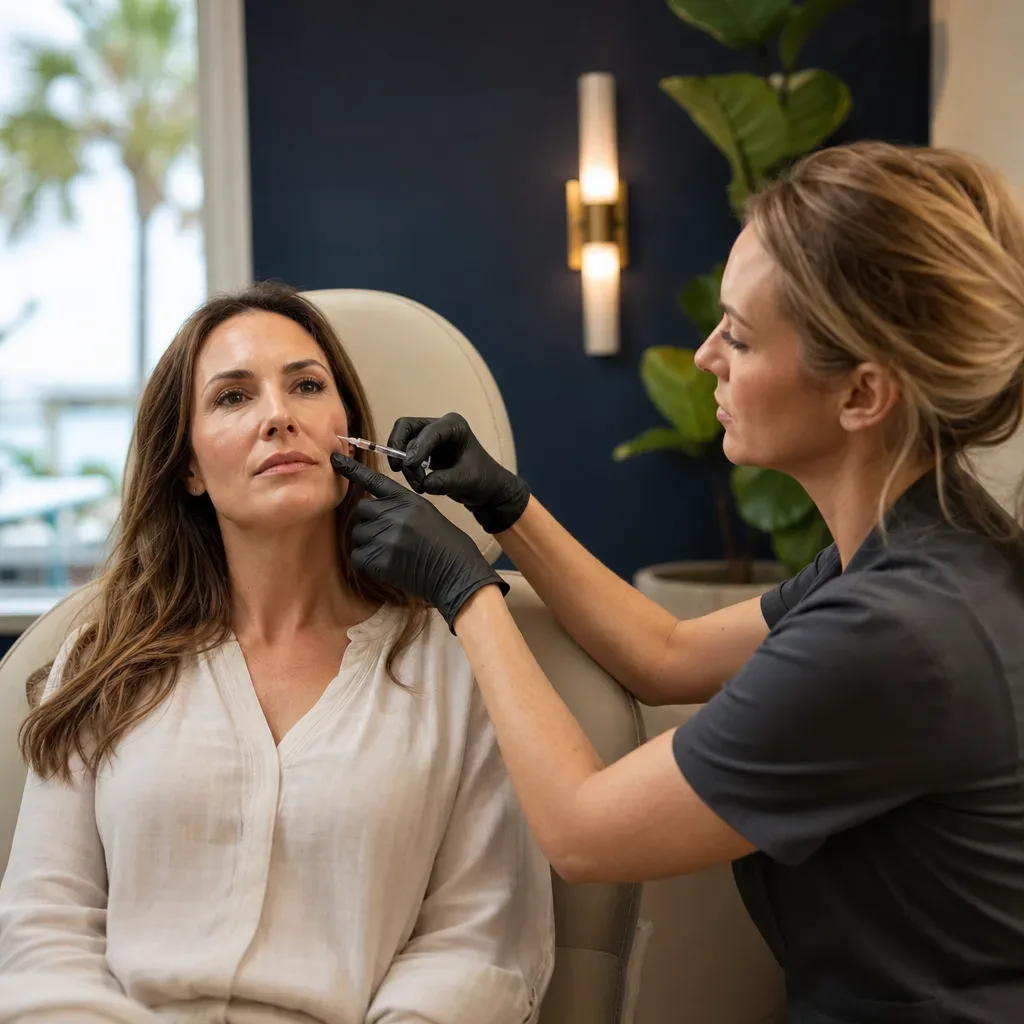
Next, the skin is cleaned. Then small amounts of gel are placed along each line or fold. Some spots are treated with a fine needle. Others may use a cannula, which is a thin tube with a rounded tip.
Most people describe the feeling as pressure or a quick pinch. Between passes, your injector may gently press or shape the area. They'll likely ask you to smile or talk partway through. That's the flexibility check happening live, making sure the gel moves with your face before you leave.
Here's what you might notice right after treatment:
- Some swelling, especially around the lips
- Redness or tiny bumps where the needle went in
- Possible bruising, which can take a few days to fade
- Tenderness when you touch the area
You'll usually see a change right away. Swelling can make the area look fuller than the final result for the first few days. The gel settles and blends with your tissue over the next week or two. Judge your result once the swelling is gone, not in the car mirror on the way home.
Most people go back to work or errands the same day. If you're coming in on a break from an office near St. Johns Town Center, that's realistic. Just know your lips may look a little puffy for a day or two. If you have a wedding, photos or a big presentation coming up, leave a couple of weeks before it.
Before you leave, your injector should give you clear aftercare steps. They should also tell you which signs mean you should call right away. Keep those instructions handy for the first few days.
A follow-up check about two weeks later is common. It's a chance to look at your result once the swelling has settled. If one side of a fold needs a touch more, that's usually when it gets adjusted. Small tweaks at that stage help you look balanced when you smile, talk and laugh.
Watch Our Video
Search Our Services
Book Now
Swelling, Bruising, and What Results Look Like Over Time
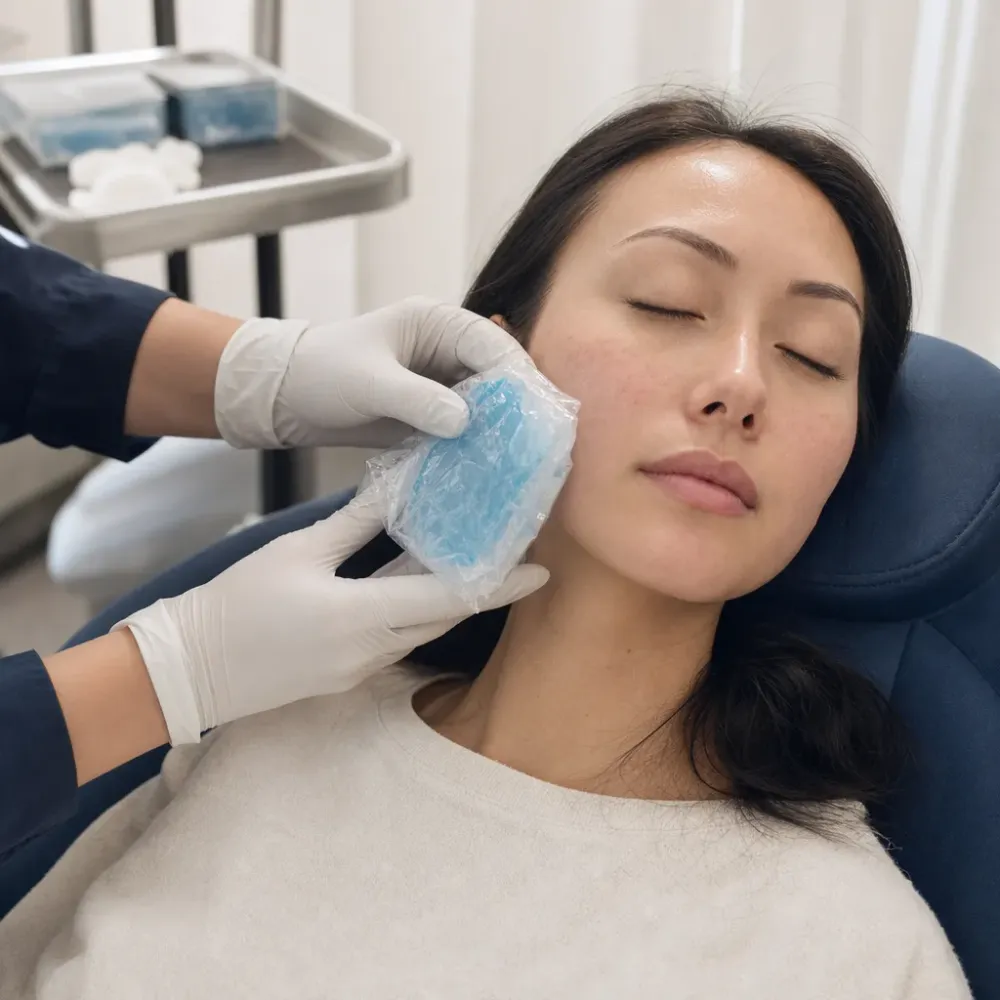
Swelling and bruising are the part most people worry about. They're also the part that passes. What's left afterward is the result you'll live with for months, so that's the part worth understanding.
Swelling doesn't show up the same way everywhere. Thin, busy skin near the lips tends to puff up more than the thicker skin along your smile lines. Bruising depends on you, too. Some people bruise easily and some barely mark at all.
Here's a common moment. You wake up the morning after treatment and one side looks fuller than the other. That's usually swelling that hasn't evened out yet, not a sign the gel went in wrong. Give it time before you decide anything.
Once the swelling fades, check your result the way people see you. A still selfie won't tell you much. Instead, look in the mirror while you talk, laugh, and smile wide.
- Your smile lines should look softer, but your smile should still look like yours.
- Your lips should move freely, with no ridge or stiff edge when you talk.
- The treated area should feel like your own skin when you touch it.
- Nothing should look heavy or fuller than the rest of your face.
If your result passes that test, the formula matched the movement. That's the reason RHA was chosen in the first place. If one area feels stiff or a line still folds deep when you laugh, bring that up at your follow-up.
RHA isn't permanent. Your body slowly breaks down hyaluronic acid over time. The fade is gradual, so you won't wake up one day with your lines suddenly back.
How long it lasts depends on the gel and the spot. Softer gels in thin, constantly moving areas like the lips often fade sooner. Firmer gels placed deeper in smile lines often hold longer. Your metabolism, how much you use those muscles, and your overall skin health play a part as well.
This is one more reason the formula match matters. A gel that fits the area wears evenly as it fades. A poor match can soften unevenly and leave you with a lumpy or flat patch before the rest catches up.
Most people come back when they first notice a line returning, not after it's fully back. Topping up a little often takes less product than starting over. We'll look at how each area held up and adjust the plan, whether that means a different RHA gel or a different treatment altogether.
Some people also pair filler with skin treatments to keep results looking fresh. Good skin quality can help filled areas look smoother and more natural as time goes on. We'll only suggest that if it fits your goals.
Book Now
Book Revance® RHA in Southside Jacksonville
Ready to Get Started?